
Addition by Subtraction: Why the "Warm Body" Strategy is Slowly Killing Your FEC

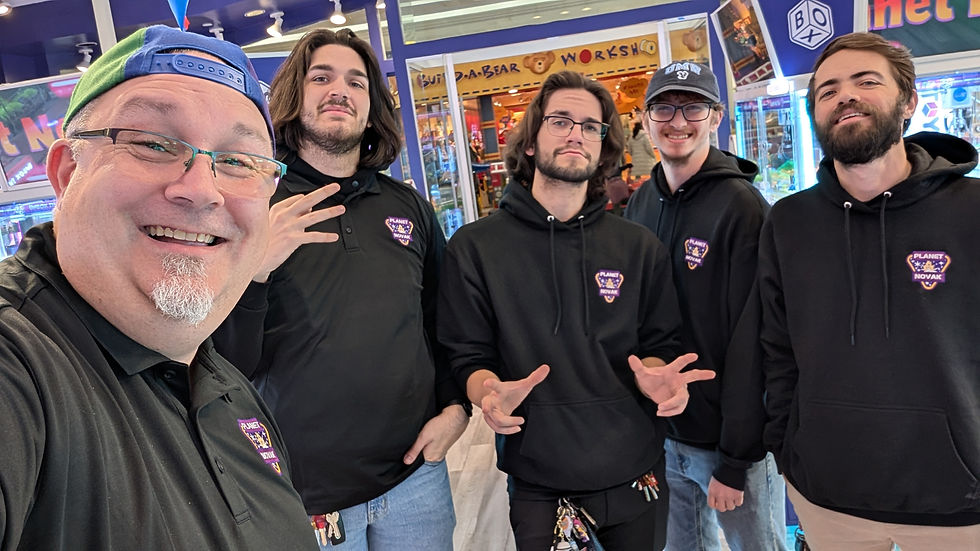
Note: This article was originally published in the May 2026 issue of RePlay Magazine. I’m expanding on it here with some extra "Clint’s Corner" strategies and structural advice for operators who need to transition from "survival hiring" to "excellence hiring."
As I travel the country on the Novak Roadshow, I hear the same refrain from nearly every operator I meet: "Clint, I just can’t find good help."
It’s the universal struggle of the 2026 FEC landscape. We are all fighting for the same local talent pool, and when we find a teenager or young adult who actually knows how to smile, make eye contact, and show up on time, we treat them like they found the Golden Ticket.
But there is a dangerous trap that many managers fall into during these lean times. It’s what I call the "Warm Body" Strategy.
It happens when you have an employee who is consistently late, calls out at the last minute, or treats your employee handbook like a suggestion rather than a requirement. You know they need to go. You know they are hurting your brand. But then you look at the Saturday schedule, see that you are already short-staffed, and you tell yourself: "I can't afford to lose them right now. A bad employee is better than no employee, right?"
Wrong. In fact, keeping a bad employee is the fastest, most effective way to ensure your best employees walk out the door.
The Invisible Tax on Your Stars

At Planet Novak, we talk a lot about our "Superstar" staff being our greatest return on investment. But here is the reality of the floor: your superstars are highly observant. They see everything. When a "warm body" calls out for the third time in a month, who picks up the slack? It’s your stars.
It starts with a simple, frantic request from a manager: “Hey, Sarah, can you stay an extra four hours to cover the laser tag vest room? Jason called out again.”
Sarah is a team player. She wants the business to succeed, and she likes you. So she says yes. She stays. She works the double. But what we as managers often forget is that Sarah isn't just "working extra hours"—she is actively giving up her personal life. She is missing her friend’s birthday party, skipping dinner with her family, and sacrificing her own mental downtime to fill a gap created by someone who simply doesn't care.
She might be okay with it once. Maybe twice. But eventually, Sarah is going to look at the scheduling board and realize that Jason is being allowed to break every rule in the book, while she is being "punished" with extra work for being reliable.
The longer you keep Jason, the sooner you lose Sarah.
The Hidden Costs: What the "Warm Body" Strategy Really Costs You
When we keep bad employees, we tend to only look at the immediate schedule grid. We think we are saving money because the shift is covered. But the "Warm Body" strategy carries heavy hidden costs that leak directly out of your P&L:
The $4,000 Turnover Leak: Industry data shows that replacing a single hourly employee costs an average of $4,000 in lost productivity, managerial time, marketing, and training. If your superstar "Sarah" quits because of your bad employee "Jason," you didn't just lose a worker—you lost a highly productive asset and incurred a major financial penalty.
The Onboarding Infection: When you hire new, enthusiastic employees and drop them into a culture where lazy, unreliable staff are tolerated, they will quickly adapt to the lowest common denominator. Within two weeks, your new hires will start copying the bad habits of the "warm bodies" because they see there are no consequences.
Customer Experience Erosion: A bad employee doesn't just annoy their coworkers; they destroy the guest experience. One cold interaction, a slow transaction, or a flat-out rude comment can prevent a family from ever booking a birthday party or coming back to your park.
The Policy Paradox

Every facility has a handbook. We spend thousands of dollars on legal fees and consultant hours to make sure our policies are airtight. But a handbook is only as strong as your managers' willingness to enforce it.
I’ve seen it time and again: a facility has a strict "three strikes" attendance policy, but a "problem child" is on strike seven or eight. When you allow that to happen, you aren't being a "nice" or "understanding" manager—you are being a weak one. You are telling your entire team that the rules don't actually matter.
Consistency is the bedrock of culture. If the rules don't apply to the bad employees, your good employees will start to wonder why they are bothering to sweat the details. You have to be willing to "flex your manager muscles."
Sure, there are times to be human—life happens, cars break down, and people get sick. But there is a massive difference between a one-time emergency and a pattern of behavior. If you don't enforce your policy consistently, you don't actually have a policy; you have a wish list.
💡 Consultant’s Corner: A 3-Step Plan for "Addition by Subtraction"
The following content is exclusive to the Novak Amusement Solutions blog.
If you know your culture needs a hard reset but you’re terrified of having a completely empty schedule next Saturday, here is the exact framework I use with my private consulting clients to transition safely:
Step 1: Conduct a "Superstar Audit"
Sit down with your management team and grade your staff. Identify your top 20% (your "Stars" who carry the culture) and your bottom 20% (the "Warm Bodies" who drag it down). Make a commitment right then and there to protect the top 20% at all costs. Ask them what they need, thank them for their reliability, and let them know you see their hard work.
Step 2: Implement "Frictionless" Paperwork
The number one reason managers don’t write people up is that the paperwork is too complicated or they don't know where the forms are. Simplify it. Have a standardized, single-page write-up form readily available in the manager's office. When Jason is late, it shouldn’t be an emotional argument. It’s a quiet, 30-second conversation: “Jason, our policy says we start at 12:00. You walked in at 12:15. I need you to sign this warning so we are documented.” Keep it factual, keep it fast, and keep it moving.
Step 3: Let the System Do the Firing
When you have clear, written checklists and a documented progressive discipline policy, you never have to "fire" anyone. The system does it for you. If an employee hits their third write-up, the system dictates the exit. It removes the personal friction and the guilt from your management team. The employee essentially chose to exit by failing to meet the clearly defined, written standard.

Ready to Build a World-Class Team?
At the end of the day, you cannot build a world-class attraction with a second-class crew. Stop settling for "warm" and start holding out for "wonderful." Your stars, your guests, and your bottom line will thank you for it.
If you are struggling with chronic call-outs, a toxic work culture, or a handbook that hasn't been updated since 2018, you don't have to rebuild your system alone. Through Novak Amusement Solutions, I work directly with FEC owners to build custom, enforceable handbooks, step-by-step daily checklists, and professional progressive discipline systems that protect your star employees automatically.
Ready to stop running your park on a "warm body" schedule?
Click above to schedule a quick chat, and let's get your team structured for success.
Clint Novak is the co-owner of Planet Novak and the founder of Novak Amusement Solutions and the Novak Network. Follow his journey on the Novak Roadshow at www.novakamusementsolutions.com or email clintnovak@gmail.com.

Comments